
Crew
Director/Screenplay – Alex Galvin, Producers – Alex Galvin & Noel Galvin, Photography – Matt Sharp, Music – Tony Burt, Visual Effects Supervisor – Gavin Laurie, Production Design – Robert Flynn. Production Company – Galvinized Films/Sirocco Post/Scave Productions.
Cast
Tania Nolan (Louise Williams), Rosella Hart (Martha Davis), Sylvia Rands (Mrs Jacobs), Kevin Keys (David Andrews), Gerald Bryan (Mr Jacobs), Alex Galvin (Dr Thomsen)
Plot
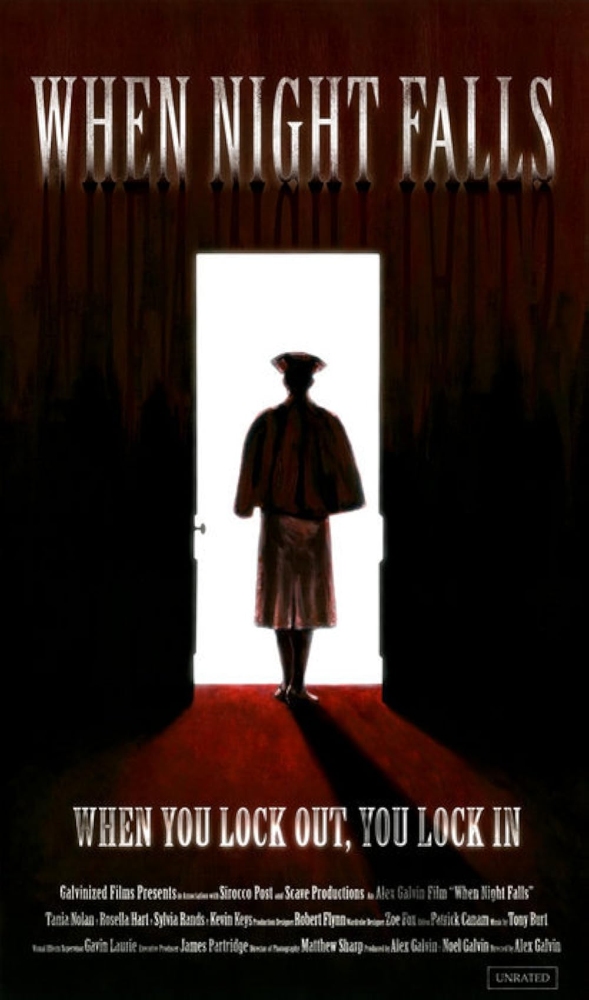
1932 and New Zealand’s Wairarapa region is being terrorised by a maniac who is killing nurses. This is believed to be Edward Leigh, a doctor who snapped after being medically disbarred. Two nurses, Louise Williams and Martha Davis, tend the ailing David Andrews in his large family home in the remote Wairarapa countryside. Louise has fallen in love with Andrews and he has proposed to her. Both the doctor and groundsman are called away, leaving the two nurses alone in the house for the night. However, someone then starts knocking on the door and trying to force their way into the house.
New Zealand, being the small country that it is (population only 4 million), has a small film industry. Despite New Zealand’s size, there have been some enormous successes enjoyed on the world stage in recent years by locals such as Peter Jackson, Jane Campion, Roger Donaldson, Lee Tamahori, Niki Caro and actors like Russell Crowe, Lucy Lawless, Anna Paquin, Karl Urban, Cliff Curtis and Keisha Castle-Hughes. That said, the country lacks a very well organised production system – there is nothing akin to the studio system, any kind of mentoring schemes or the indie film scene that the US enjoys. Succeeding internationally is fairly much hit and miss. Certainly, Peter Jackson clawed his way up by making splatter films like Bad Taste (1988), Meet the Feebles (1990) and Braindead/Deadalive (1992). And in recent years a number of ingenue filmmakers have turned to the low-budget and often digital video horror film as a means of gaining a foothold – see efforts like The Irrefutable Truth About Demons (2000), The Locals (2003), Orphans and Angels (2003), Flatmates Wanted (2004), Hidden (2005) and The Tattooist (2007) – although distribution of these is often sporadic.
When Night Falls is one such digital video feature from debuting director Alex Galvin. I must admit to almost having missed When Night Falls in local newspaper listings – it came out with zero publicity and one overlooked the relatively nondescript title, which if anything tended to give the impression that it was a sequel to the arthouse success Before Night Falls (2000).
For a debuting director Alex Galvin conducts his camera set-ups with quite a degree of confident assurance. The dialogue tends to a little bland at times, as though the actors were looking around for something a little meatier to say, but they are put through their paces with at least a conviction that allows them to inhabit the parts they have been given. Galvin also spends a good deal of time creating something that today’s horror movies have almost forgotten – slowly accruing atmosphere. This does cause When Night Falls to tend to the somewhat slow at times. However, once we get to the main horror element, Galvin produces a couple of decent scares – the moment where Tania Nolan is jolted by the appearance of a face in the cellar, another where she walks down a hallway and a door silently creeps open behind her.
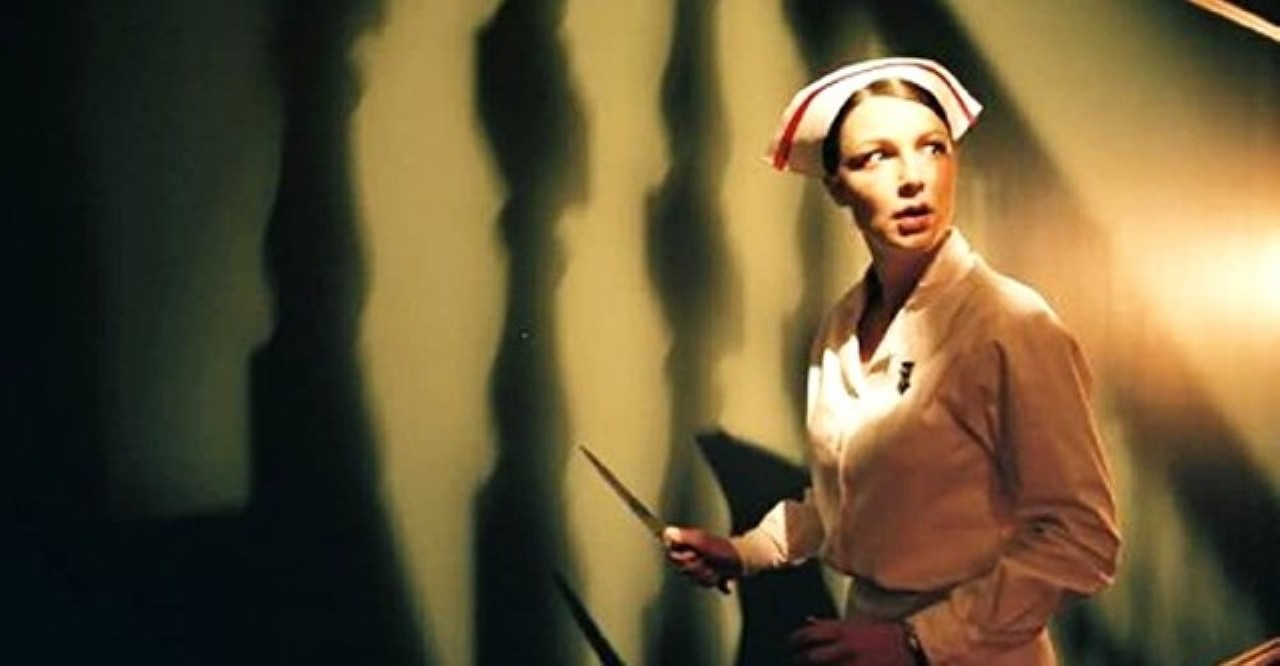
On the minus side, When Night Falls fails to offer adequate pay off on all the build-up. After creating some effectively accruing atmosphere, Alex Galvin dips too readily into the slasher movie book of tricks and the scenes with Tania Nolan being pursued through the house by the killer just too generic. I really wanted Galvin to push these scenes for seat-edge suspense – he had certainly conducted enough build up that his audience (well okay, me, as I was the only person in the screening) were ready for something more. However, it never comes and the biggest disappointment about this is that while When Night Falls is three-quarters build up, when the psycho scenes emerge everything is over and done within a matter of minutes. Had Galvin pushed these scenes for more When Night Falls could have been something to make one take notice – certainly his assurance with build-up and the handful of scares we do have show much promise. The only main disappointment is the contrived and far-fetched revelation of the killer’s identity.
The period setting is conducted with a fair degree of verisimilitude. Alex Galvin shot most of the film around the Wellington region (despite the film’s stated Manawatu and Wairarapa locations), using a number of historic places to obtain the flavour of the film’s stated 1932 period setting. My main technical quibble here might be the nurse’s uniforms, which are all 1970s period with knee-length skirts and short bonnets, rather than 1930s where the skirts were nearly ankle-length and the bonnets had huge great trains that ran halfway down the nurse’s back. (Hey, I know these things, my ex was a nurse in Wellington). Also the oxygen masks used are the modern lightweight transparent plastic ones rather than the cumbersome rubber efforts used during the period.
Alex Galvin subsequently went onto make the science-fiction film Eternity (2013) and an adaptation of the popular psychological ghost story The Turn of the Screw (2020).