

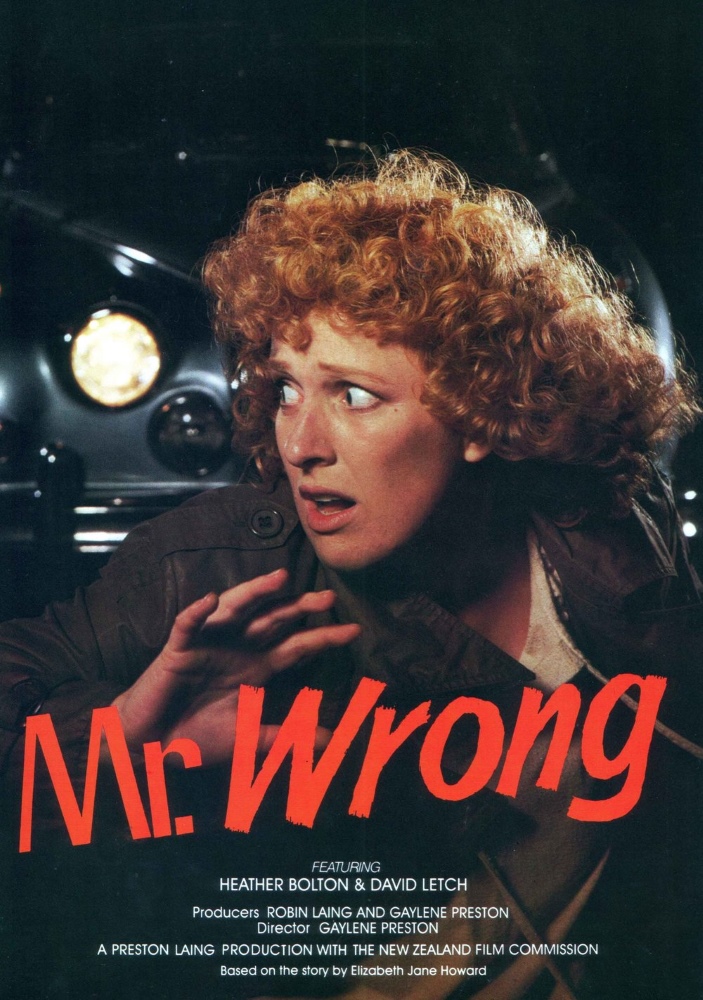
aka Dark of the Night
New Zealand. 1985.
Crew
Director – Gaylene Preston, Screenplay – Gaylene Preston, Geoff Murphy & Graeme Tetly, Based on the Novel by Elizabeth Jane Howard, Producers – Gaylene Preston & Robin Laing, Photography – Thom Burstyn, Music – Jonathan Crayford, Visual Effects – Burstyn & Alun Bollinger, Art Direction – Mike Beecroft. Production Company – The New Zealand Film Commission.
Cast
Heather Bolton (Meg Alexander), David Letch (The Man), Perry Piercy (Mary Carmichael), Margaret Umbers (Samantha), Suzanne Lee (Val), Gary Stalker (Bruce), Danny Mulheron (Wayne), Michael Haigh (Mr Whitehorn)
Plot
Meg Alexander gets a job in the city and buys a large old Daimler car to drive home to her parents in the country on the weekends. While returning to the city after her first weekend visit home, she stops at a railway crossing where a mystery man and woman get into the car. The man appears threatening but the two of them vanish when Meg pulls up at a gas station. Back in the city, the car appears to be haunted. Meg discovers that the woman she saw was the ghost of the car’s previous owner and that the sinister man may have killed the woman. The same man now appears to be stalking Meg.
Up until the 1980s, the horror film was an entirely unknown genre within New Zealand filmmaking – the sole film that was even vaguely horror was the comic Gothic The Scarecrow (1982). Around 1984 we saw a gateshed, beginning with David Blyth’s zombie splatter film Death Warmed Up (1984) (which also featured a sinister David Letch). The oddest aspect of this was a duo of what could be called feminist slasher films, with Melanie Reed’s limp Trial Run (1984) and Mr Wrong, both of which were directed by women and seemed to set out to tell stories about women being stalked that countered the inherent misogyny of the slasher film (a genre that New Zealand otherwise seemed to sidestep altogether).
Mr Wrong is certainly a better-made venture into the woman’s horror film than Trial Run was. Unfortunately, it is by no means a success either. Director Gaylene Preston handles the opening with David Letch and Perry Piercy getting into the car and unnerving Heather Bolton with style and a nicely offbeat sense of humour. Everything works well up until Heather Bolton returns to the flat, after which the film falls into standard Woman Alone in Peril Jumping at Every Bump schtick. And every bump we get to feel too. More than two-thirds of the film consists of Heather Bolton’s wandering around the flat being scared by red herrings or various men popping out of the shadows. Gaylene Preston produces one or two good jumps but the plot runs to a standstill in the interim.
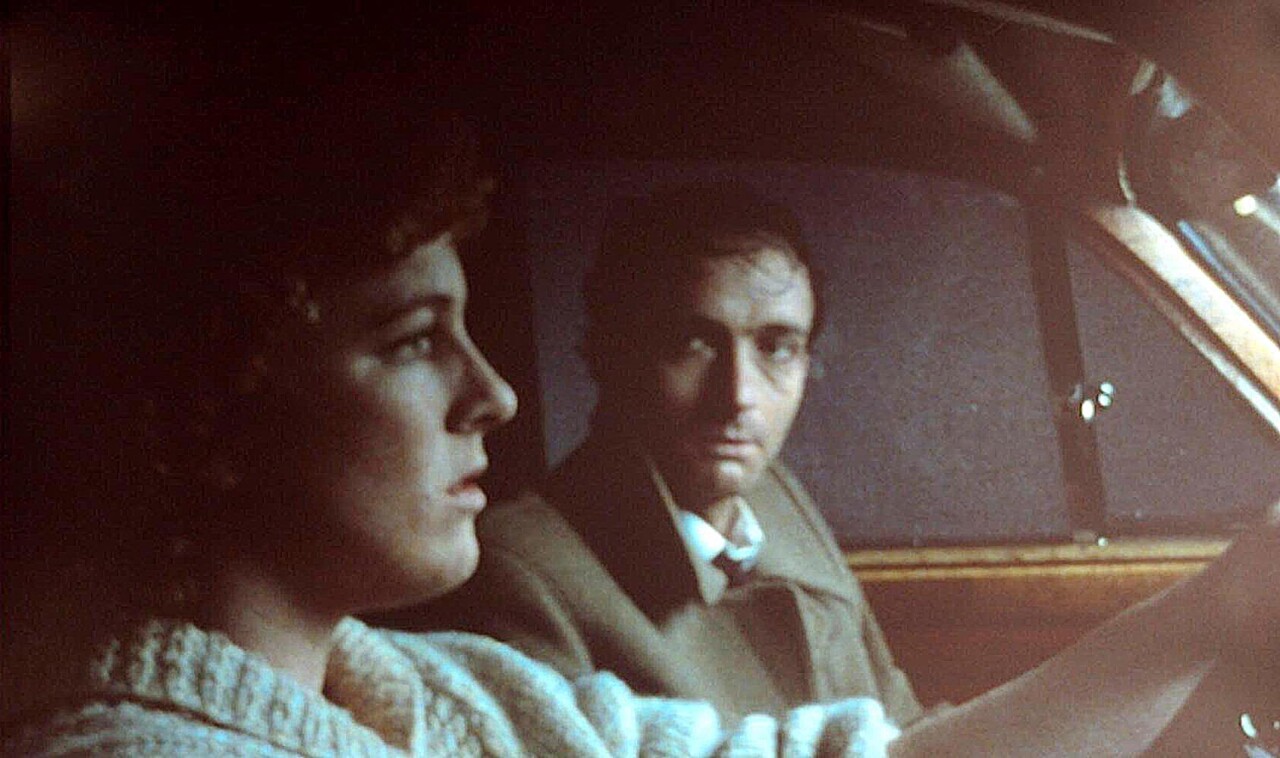
Furthermore, the mix of stalker and supernatural do not gel easily and is confusing. It is never explained whether the Man (a nicely chilling performance by David Letch, a dead ringer for Talking Head David Byrne) is ghost or man. If the latter, as the film seems to finally decide, how does he appear and disappear so suddenly? Does it not strain coincidence that he is waiting in the middle of nowhere to get a ride when the car of the woman he has killed just happens to be stopped waiting for a train to pass? What is the deep breathing from inside the car? What causes the fuel gauge in the car to play up? By its failure to keep the middle afloat, the film cannot help but allow one to ponder such loose ends.
Mr Wrong was retitled Dark of the Night in release in the US. It should not be confused with the Ellen DeGeneres comedy Mr Wrong (1996).
Director Gaylene Preston later returned to the Woman in Peril genre with the superior Perfect Strangers (2003), a very strange abduction thriller that turns into a bizarre ghost story. Elsewhere, she has directed the NZ dramas Ruby and Rata (1990) and the documentaries Bread and Roses (1994) and War Stories (1995), as well as the mini-series Hope and Wire (2014) about the Christchurch Earthquake. Mr Wrong is also co-written by Geoff Murphy, director of the Kiwi cult classic Goodbye Pork Pie (1980) and the post-holocaust film The Quiet Earth (1985).