


Crew
Director – Francois Girard, Screenplay – Francois Girard & Don McKellar, Producer – Niv Fickman, Photography – Alain Dostie, Music – John Corigliano, Conductor – Esa Pekka-Salonen, Violin Solo – Joshua Bell, Production Design – Francois Seguin. Production Company – Telefilm Canada/Rhombus Media/Mikado/Channel Four Films.
Cast
Cremona:- Carlo Cecchi (Nicole Buschetti), Irena Grazioli (Anna Buschetti), Anita Laurenzi (Cesca). Vienna:- Jean-Luc Bideau (Georges Poussin), Christoph Koncz (Kaspar Weiss), Clothilde Mollett (Antoinette Poussin), Rainer Egger (Brother Christophe). Oxford:- Jason Flemyng (Frederick Pope), Greta Scacchi (Victoria). Shanghai:- Sylvia Chang (Xiang Pei), Liu Zi Feng (Chou Yuan), Tao Hong (Chan Gong), Han Xao Fei (Ming). Montreal:- Samuel L. Jackson (Charles Morritz), Don McKellar (Evan Williams), Colm Feore (Auctioneer), Monique Mercure (Madame Leroux), Ireneusz Bogajewicz (Ruselsky)
Plot
In present-day Montreal, the famous Red Violin is placed on the block at Duval’s auction house. In 17th Century Cremona, Italy, Anna, the wife of master violin maker Nicole Buschetti, had her fortune told by a servant woman. Shortly after, Anna died in childbirth and Nicole created a special violin, which he painted red in her memory. Throughout history, the red violin passes through many hands, bringing to each genius musical inspiration, yet also a cursed existence. In 18th Century Vienna, it is discovered in the hands of child prodigy Kaspar Weiss who is taken in by the impoverished Georges Poussin who has high hopes for him. In 18th Century Oxford, it comes into the hands of violinist Frederick Pope who uses it to inspire him and his lover, the writer Victoria, to great heights. In 20th Century Communist Shanghai, it comes into the hands of Xiang Pei who must hide it from the purges of the Cultural Revolution, where the state is determined to root out the influence of decadent Western music. In present-day Montreal, expert Charles Morritz is brought in to prepare the instruments for the auction and becomes obsessed when he thinks he may have found the Red Violin.
The Red Violin was a considerable arthouse hit when it came out, being nominated for Best Foreign Language Film at the Golden Globes and its score winning that year’s Academy Award. It was directed by Francois Girard, a Quebecois director who had debuted with the Peter Gabriel concert film Secret World Live (1994) and would go onto make other music-related projects such as Thirty-Two Short Films About Glenn Gould (1993) and the tv series Yo-Yo Ma Inspired by Bach (1997). He followed this with another historical arthouse hit Silk (2007).
Perhaps more interestingly, The Red Violin was written by Canadian actor Don McKellar, who is developing as a most promising creative artist in his own right with the script for the hilariously eccentric road movie Highway 61 (1991), Girard’s Glenn Gould, the superb science-fiction film Blindness (2008), and also made his directorial debut with the excellent End of the World drama Last Night (1998) the same year that The Red Violin came out and has gone on to direct the non-genre likes of Childstar (2004) and The Grand Seduction (2013).
The Red Violin is lavishly mounted and photographed. What is doubly impressive about this is that the film was made on a budget of only $10 million, usually around half of what the average Hollywood film spends on its promotional budget alone. The fact that on this meagre budget Francois Girard has managed to bring in names like Samuel L. Jackson and Greta Scacchi, not to mention shoot in five different countries, is a major miracle.
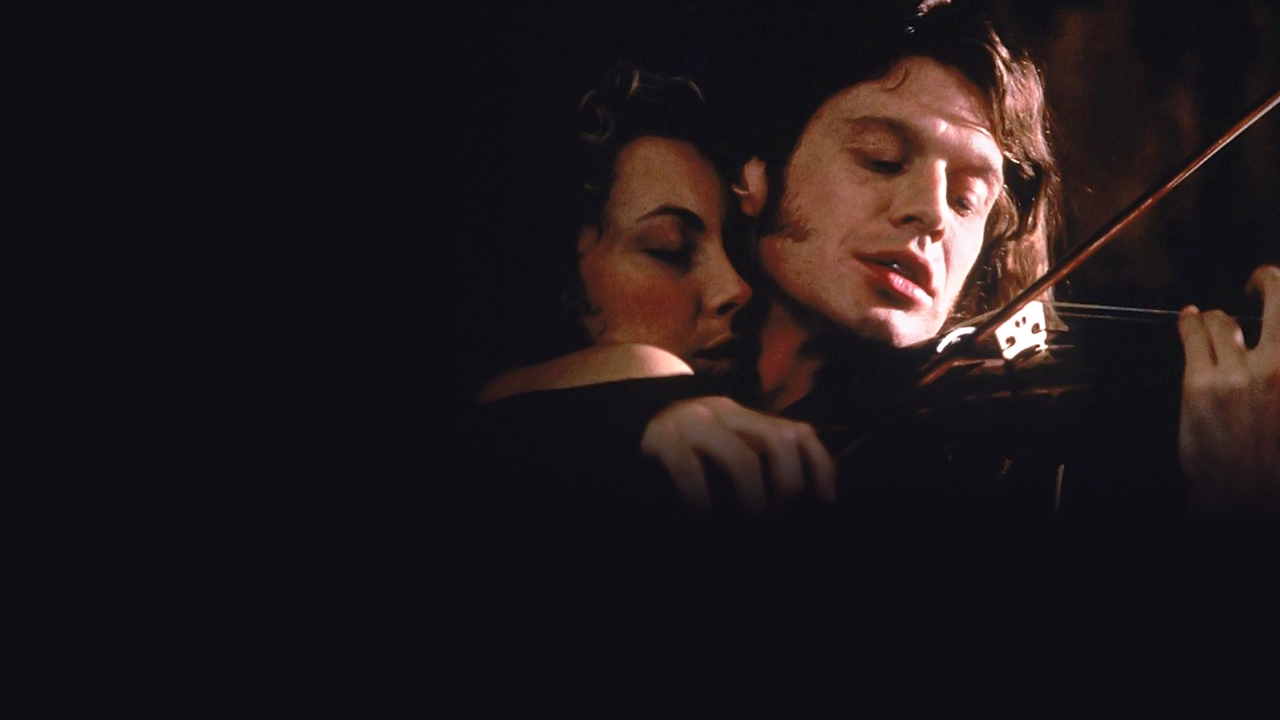
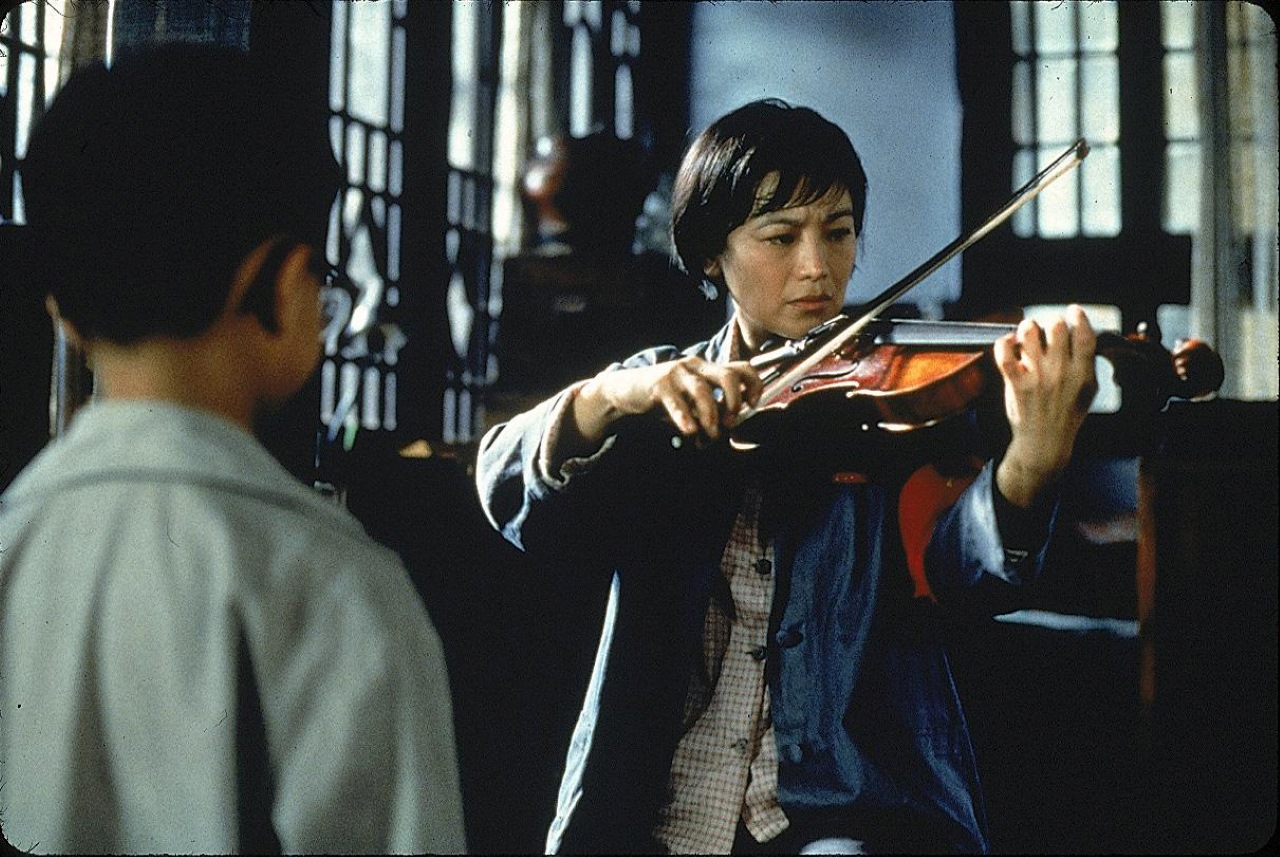
One hates to decry such effort but for all that The Red Violin seems a ‘nice’ film, rather than a good film. It is one aimed squarely at the upper-class, Academy Awards type arthouse crowds – it trades in a cravat and tie version of art with a capital A. However, beyond its locations, its lovely compositions and wonderful score, the film rarely comes to life. For all that it is a film centred around visionary inspiration that verges on madness, it is a film severely lacking in any of that passion itself.
One brief part where does is the romance between Jason Flemyng and Greta Scacchi in the Oxford sequences but even that seems muted. As is always the problem with portmanteau stories, the stories without longer treatment seem slight. And these, did they not come with the trappings of Art invested upon them, would only be fairly ordinary stories.
The most interesting story is the Montreal one with Samuel L. Jackson. Here Francois Girard makes it appear that Jackson is up to nefarious things but then lets the story wash out in a big anticlimax. The auction sequence, which is repeated throughout between episodes, is led up to hang on whether Jackson is going to steal the violin or not and the big, suspense-fraught lame climax is simply … that he walks out of the building. In the final coda with him talking on to his daughter on his cellphone, we are still not certain if he did or didn’t steal the violin. One might also note that despite being set around music, the film is clearly directed by a non-musician as the violin bowing enacted on screen by the actors often does not match the music on the soundtrack that the characters are supposedly playing.
(Winner for Best Musical Score at this site’s Best of 1998 Awards).